


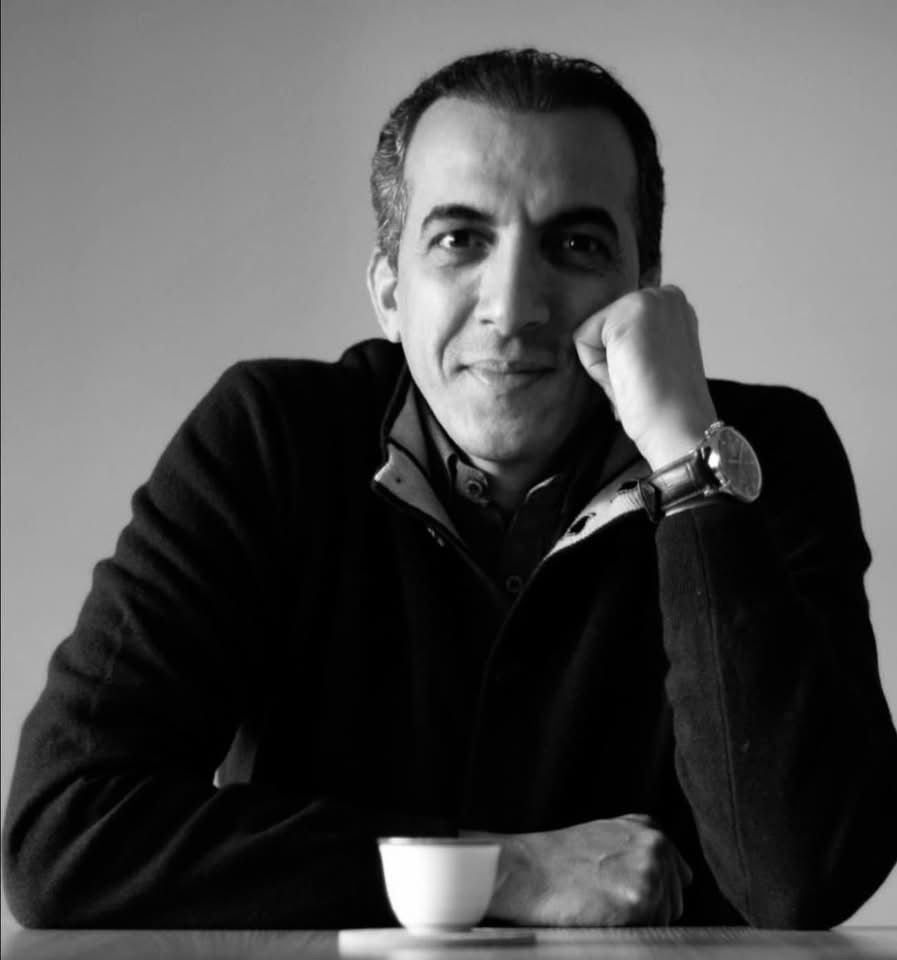
Ahmed El farrek
In the contemporary art scene, the name Rachid Gholam stands out not merely as a melodious voice, but as an existential phenomenon that combines refined aesthetic sensibility with the depth of moral cultivation. He embodies that organic unity of refined taste, high spirit and encyclopaedic knowledge, where singing for him transforms from mere fleeting entertainment and a means of livelihood into an act of spiritual ‘enlightenment’ and intellectual ‘revolution’.
The essence of the situation: a single face in a multifaceted world
Rachid Gholam lives the paradox of existence between two identities and nationalities: Moroccan and British. Yet this duality does not reflect a split in the self; on the contrary, it is the embodiment of a rejection of ‘moral duality’. He is a man who lives with two nationalities out of necessity, but does not live with two faces.
In the philosophy of existence, Gholam embodies ‘laboratory truth’, where words match practice, ethics match mission, and the self unites with principle, turning a deaf ear to all forms of social or political hypocrisy. As Hegel says: “If we are to attribute a final goal to art, it can be none other than the goal of revealing the truth.”
The voice of the oppressed: commitment and the consequences of the word
Ghulam gained international fame and entered the hearts of millions before entering their homes, despite having experienced “persecution” and oppression throughout his artistic career – a paradox that confirms that the “responsible word” cannot be silenced, but rather draws its strength from the very pressure exerted upon it. Through his art, he chose to stand up to oppression, championing the causes of the oppressed and the vulnerable; his singing was not merely a display of vocal prowess, but a ‘manifesto’ of noble values: love, justice, security and peace.
Gholam bore the burden of ‘the consequences of his words’, realising that true art is that which takes up a cause, walks the path of suffering in defence of human dignity, and remains steadfast until it becomes a model in its art—and so he was.
Hymns of Love: From Ontology to the Unseen
Gholam’s genius is evident in his ability to narrating divine and prophetic love through a refined artistic language, transforming spiritual longings into a universal language that everyone can understand. Yet his poetry is not a retreat from reality, but rather a relentless search for the ‘Absolute’ in a time of the ‘Relative’. He sings of peace, not as a cold slogan or a dull resignation, but because it befits human dignity and is an existential necessity for the fulfilment of humanity.
In conclusion, Rachid Gholam-the faithful and patient believer, the noble man, and the cultured artist-resisted the culture of vulgarity and did not fall into the trap of triviality. He lived with dignity through his refined manners and noble character, proving that art can be a tool for liberation, and that when a voice emanates from a pure heart and is blended with a sense of mission and broad knowledge, it becomes a bridge connecting earth to heaven, and the self to the other, in a transcendent human unity that admits of no division. May God grant you healing and well-being, my dear brother Rachid, elevate your status, and bestow His abundant rewards upon you in this world and the hereafter. To your Lord is the final return.
